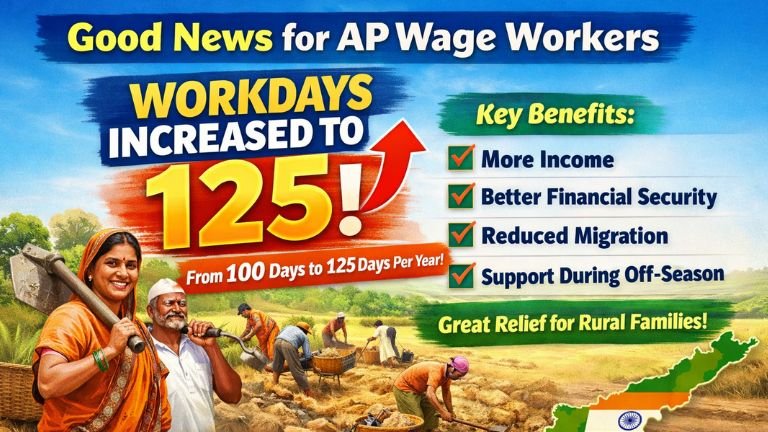
Good News for AP Wage Workers : Workdays Increased to 125
In a major relief for rural households, the Mahatma Gandhi National Rural Employment Guarantee Act (MGNREGA) has been enhanced in Andhra Pradesh, with the number of guaranteed workdays increased from 100 to 125 days per year. This move is expected to benefit lakhs of wage workers across villages by improving their income stability and reducing financial stress.
What is AP Wage Workers scheme
MGNREGA is one of the largest social welfare programs in India, launched by the Government of India. It guarantees wage employment to rural households willing to do unskilled manual work. The scheme aims to enhance livelihood security while also creating useful rural infrastructure such as roads, ponds, and irrigation facilities.
Under the scheme, every rural household can demand work, and the government is obligated to provide employment within a stipulated time. If work is not provided, the applicant is entitled to an unemployment allowance, making it a rights-based program rather than a welfare handout.
What’s New in Andhra Pradesh?
The latest update increasing the workdays to 125 is a significant step by the state government. Previously, beneficiaries could avail only 100 days of work in a financial year. With the additional 25 days, families can now earn more and better manage their household expenses.
This decision is particularly beneficial in times of economic uncertainty, agricultural distress, or natural calamities when rural employment opportunities become scarce. The enhancement ensures that workers have access to more consistent employment throughout the year.
Benefits of Increased Workdays
1. Higher Annual Income
The most direct benefit is increased earnings. If a worker earns approximately ₹250 per day, the additional 25 days can bring an extra ₹6,000–₹7,000 annually. For low-income families, this amount can make a significant difference in meeting daily needs.
2. Improved Financial Security
With more workdays, rural households can better plan their finances. They can spend on essential needs like food, healthcare, and children’s education without relying heavily on loans or external support.
3. Reduced Migration
One of the biggest challenges in rural India is migration to cities in search of work. By providing additional employment locally, the scheme helps reduce this migration, allowing families to stay together and maintain social stability.
4. Support During Agricultural Off-Season
Farm labourers often struggle during the off-season when agricultural work is unavailable. The extended workdays under MGNREGA provide an alternative source of income during such periods.
5. Women Empowerment
A large number of MGNREGA workers are women. The increase in workdays means more opportunities for women to earn independently, contributing to household income and gaining financial independence.
Transparency and Payment System
The scheme follows a transparent system where wages are directly credited to workers’ bank accounts through Direct Benefit Transfer (DBT). This reduces corruption and ensures timely payments. Workers can also track their job status, attendance, and payments online using official portals or mobile apps.
Challenges to Consider
While the increase in workdays is a welcome move, effective implementation is crucial. In previous years, not all households were able to utilize the full 100 days due to limited availability of work or delays in project approvals. Ensuring adequate funding, proper planning, and timely execution of projects will determine the success of this initiative.
Additionally, timely wage payments remain an issue in some areas. Addressing these delays will be essential to maintain trust in the system and ensure that workers fully benefit from the scheme.
How to Apply or Check Status
Workers who wish to benefit from MGNREGA must have a valid Job Card. Those who do not have one can apply through their local Gram Panchayat. Once registered, they can demand work and track their employment details online.
Official Website: https://nrega.nic.in
Through this portal, workers can:
- Check job card details
- View work allocation
- Track payment status
- Raise complaints if needed
Conclusion
The decision to increase MGNREGA workdays to 125 in Andhra Pradesh is a progressive step toward strengthening rural livelihoods. It not only enhances income opportunities but also supports social and economic stability in villages. If implemented effectively, this initiative can significantly improve the quality of life for rural wage workers and contribute to the overall development of the state.
This move reflects the government’s commitment to supporting vulnerable sections of society and ensuring inclusive growth. Rural workers should take full advantage of this opportunity to secure better livelihoods and financial independence.